
2026 Ford Bronco Sport vs. Ford Escape: Which Small SUV Is Right for You?
The Ford Bronco Sport and Escape share a platform but not a personality — one is built for trails and winter, the other for fuel economy and highway comfort. Here's how to choose.
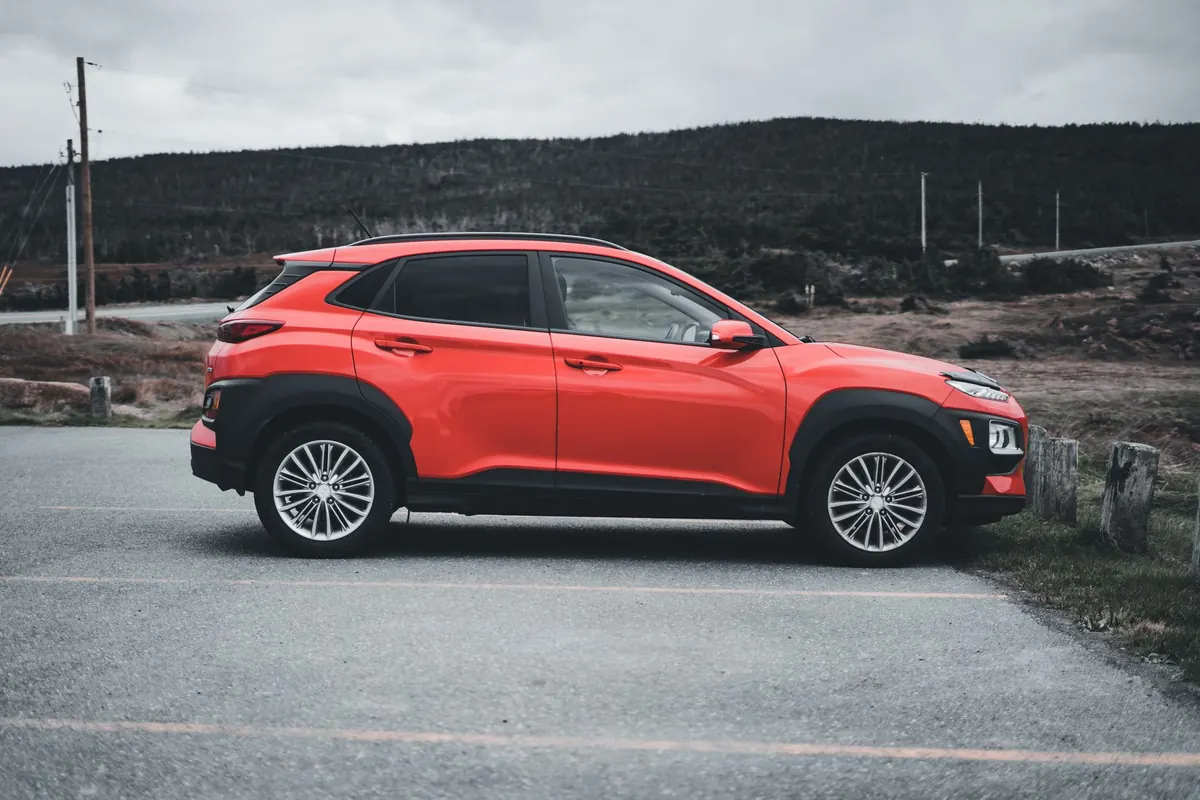
Ford sells two small SUVs that share a platform, a showroom, and a price neighborhood, yet they feel nothing alike from the driver's seat. The Escape is the quiet, efficient commuter. The Bronco Sport is the boxy one with roof rails, a rubberized cargo floor, and a name borrowed from a truck that goes where the pavement stops. Neither is a mistake. Choosing the wrong one, though, means living with a compromise you never needed to make.
Two small SUVs, two very different briefs
Both seat five. Both fit a standard garage bay. Both start with a turbocharged 1.5-liter three-cylinder in their volume trims. The similarities fade fast after that.
The Escape is built around the daily drive: front-wheel drive standard, a low step-in height, an available hybrid powertrain, and a slippery shape that cuts through wind instead of pushing against it. The Bronco Sport sends power to all four wheels on every trim, sits higher, and offers drive modes calibrated for sand, mud, and slick pavement.
One way to think about it: the Escape is a tall hatchback that happens to be an SUV. The Bronco Sport is a small truck that happens to be comfortable.
Off-road capability: the Bronco Sport wins, with a caveat
This is not close. The Bronco Sport rides higher, with more ground clearance than the Escape, shorter front and rear overhangs, and all-wheel drive standard across the lineup. Upper trims add all-terrain tires and a more capable rear drive unit that can shuffle torque side to side, which helps when one wheel is on ice and the other is on gravel. Ford's terrain modes change throttle and transmission behavior so the vehicle doesn't fight you.
The caveat: most Bronco Sport owners rarely leave pavement. What they get instead is confidence — in an unplowed driveway, on a rutted Forest Service road, at a muddy trailhead, backing a boat down a slick ramp. That confidence is worth real money to some drivers and worth nothing to others.
An all-wheel-drive Escape handles gravel roads, packed dirt, and modest snow without complaint. It is not the vehicle for deep mud, standing water, or rock shelves. Low clearance and street-oriented tires set the limit, and no drive mode changes that. One trade-off worth naming: all-terrain tires on the Bronco Sport add road noise and hurt fuel economy, and the boxy shape does it no favors at the pump. If you spend 95 percent of your miles on I-95, that's a cost with little return.
Powertrains and fuel economy: the Escape's home turf
Ford offers three powertrains across these two vehicles, and they tell you everything about intent. The Escape's base 1.5-liter turbo three-cylinder makes 180 horsepower and returns up to 30 mpg combined with front-wheel drive. The optional 2.0-liter turbo four in the Escape ST-Line Elite makes 250 horsepower and still manages respectable highway numbers. Then there's the Escape Hybrid, which pairs a 2.5-liter four with an electric motor for 192 horsepower and up to 42 mpg combined in front-wheel-drive form. That hybrid is the efficiency champion of the pair, and it's the reason many buyers walk past the Bronco Sport without a second look.
The Bronco Sport makes do with two engines: the same 1.5-liter turbo three (181 hp) and a 2.0-liter turbo four (250 hp) on the Badlands and Heritage Limited trims. Every Bronco Sport has all-wheel drive, which adds drag and weight. The boxy profile, all-terrain tires on upper trims, and a less aerodynamic shape mean real-world fuel economy lands in the mid-20s for the three-cylinder and low-20s for the four. Over 15,000 miles a year, that difference can be several hundred dollars. If fuel costs matter more than trailhead confidence, the Escape Hybrid is the rational choice.
Interior space and daily usability
Here's a surprise: the Bronco Sport is actually a bit more spacious in the second row for headroom, thanks to its upright roofline. Legroom is nearly identical. The Escape counters with a lower load floor, which makes lifting heavy coolers or dogs easier. The Bronco Sport's rear seats fold flat, and the rubberized cargo floor with a built-in bottle opener (yes, really) is a nice touch for muddy gear. But the Escape offers more total cargo volume with the seats up — about 37.5 cubic feet versus 32.5 in the Bronco Sport. Fold the seats down, and the Escape's advantage grows slightly.
Where the Bronco Sport shines is in the details: zippered seatback pockets, a flip-up rear window that opens independently of the tailgate, and roof rails that can handle a small kayak or bike rack. The Escape has a hands-free power liftgate on higher trims, which is genuinely useful when your arms are full. Neither interior is luxurious, but the Escape feels more carlike, with softer touchpoints and a lower hip point that makes getting in and out easier for kids and older passengers. The Bronco Sport's upright seating and high step-in are a plus for visibility and a minus for accessibility.
Technology, safety, and trim walk
Both vehicles share Ford's latest infotainment system, available with an 8-inch or 13.2-inch touchscreen depending on trim and year. Wireless Apple CarPlay and Android Auto are standard on most trims, and the systems are generally responsive. The Bronco Sport adds off-road-specific displays: an inclinometer, a power distribution gauge for the all-wheel-drive system, and a front camera with a washer on higher trims. Those are genuinely useful when you're creeping over a ridge.
Ford Co-Pilot360 is standard across both, including automatic emergency braking, blind-spot monitoring, lane-keeping assist, and rear cross-traffic alert. Adaptive cruise control and evasive steering assist are available on upper trims. Neither vehicle has a significant safety edge in crash tests, though the Escape's lower center of gravity gives it a slight stability advantage in emergency maneuvers.
Trim levels matter more than usual here. The Escape comes in Base, Active, ST-Line, Platinum, and Plug-In Hybrid trims. The Bronco Sport runs Base, Big Bend, Heritage, Outer Banks, Badlands, and Heritage Limited. The sweet spot for most buyers is the Bronco Sport Big Bend or Outer Banks for a balance of capability and comfort, or the Escape Active or ST-Line for efficiency and features. The Badlands is the only Bronco Sport with the more powerful engine and the advanced rear drive unit, so if you want real off-road hardware, that's the one to get — and it's priced accordingly.
Pricing and value: where the math gets interesting
The Escape starts around $29,000 for a base front-wheel-drive model and climbs past $40,000 for a loaded Platinum Hybrid. The Bronco Sport starts around $31,000 and can top $45,000 for a fully loaded Badlands with the premium package. That's a meaningful gap, but it narrows when you compare all-wheel-drive Escapes to base Bronco Sports. An all-wheel-drive Escape Active is roughly $31,000, which is within a few hundred dollars of a Bronco Sport Big Bend. At that point, the decision is purely about priorities: fuel economy and a quiet ride versus ground clearance and standard all-wheel drive.
Resale value favors the Bronco Sport, at least historically. The Bronco name carries cachet, and the boxy styling has aged well. The Escape, while competent, is more anonymous, and its resale values have been average. If you lease, the Escape often has better incentives. If you buy and keep for the long haul, the Bronco Sport may hold more value, but you'll pay more at the pump along the way.
Which one is right for you?
Ask yourself three questions:
- Do you regularly drive on unmaintained roads, deep snow, or muddy trails? If yes, the Bronco Sport's clearance, standard all-wheel drive, and drive modes are worth the fuel penalty. If no, the Escape's efficiency and comfort win.
- How much do you care about fuel costs? The Escape Hybrid can save you $500 or more per year over the Bronco Sport's three-cylinder. Over five years, that's real money.
- Do you need to tow? The Escape with the 2.0-liter turbo can tow up to 3,500 pounds. The Bronco Sport maxes out at 2,200 pounds with the same engine, and just 2,000 pounds with the three-cylinder. That's a significant difference if you have a small camper or jet ski.
There's no universal answer. The Escape is the better commuter, the better family hauler, and the better value on a pure cost-per-mile basis. The Bronco Sport is the better adventure sidekick, the more distinctive design, and the one that makes you smile when you see a dirt road. Ford built both because both kinds of buyers exist. The mistake is buying the one that doesn't match your actual life.
If you spend more than a few weekends a year on rough roads, the Bronco Sport earns its keep. If your "off-road" means a gravel driveway, the Escape will save you money every single mile.
Photo: Erik Mclean / Pexels